Tsatsa practice
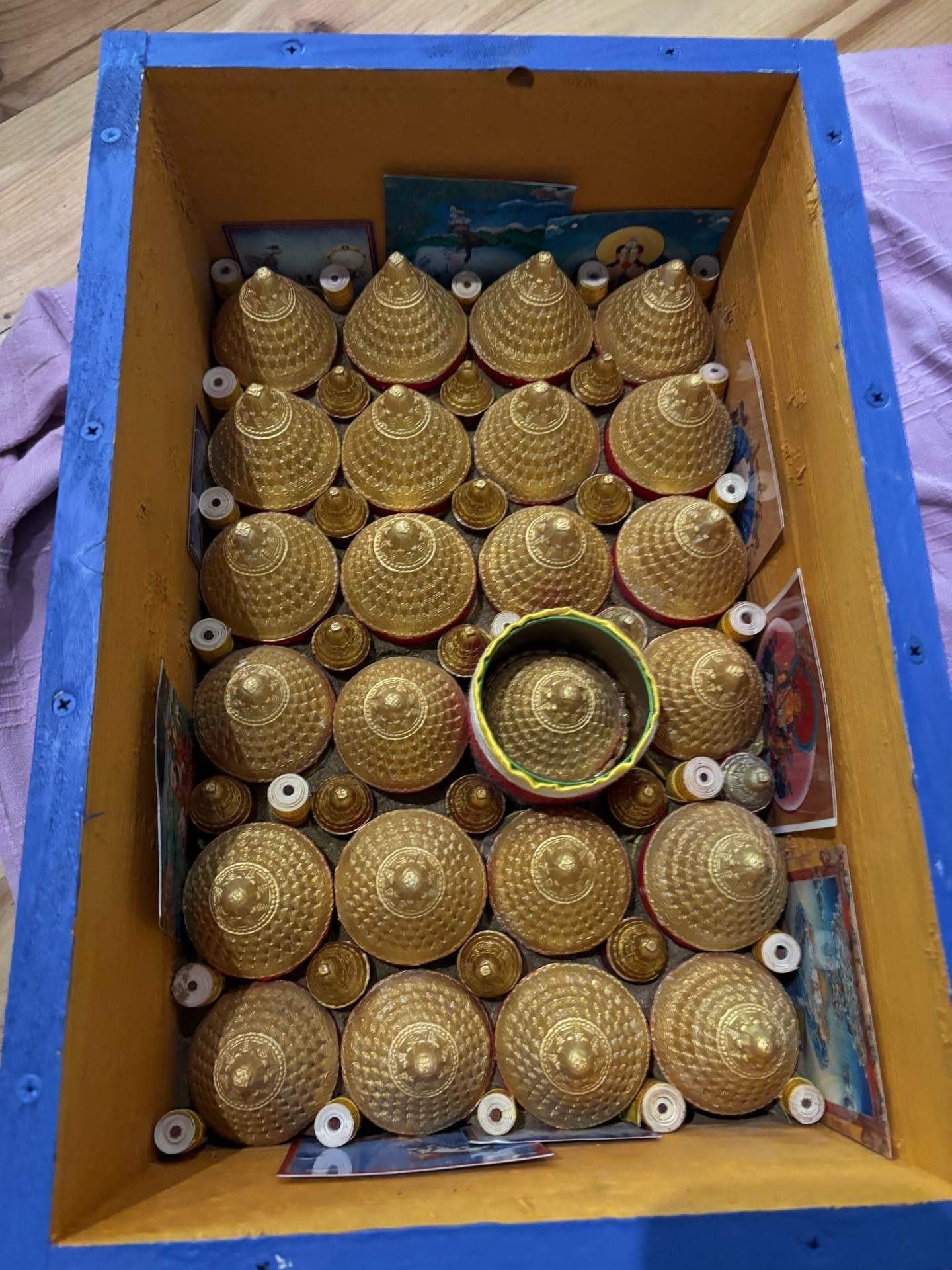
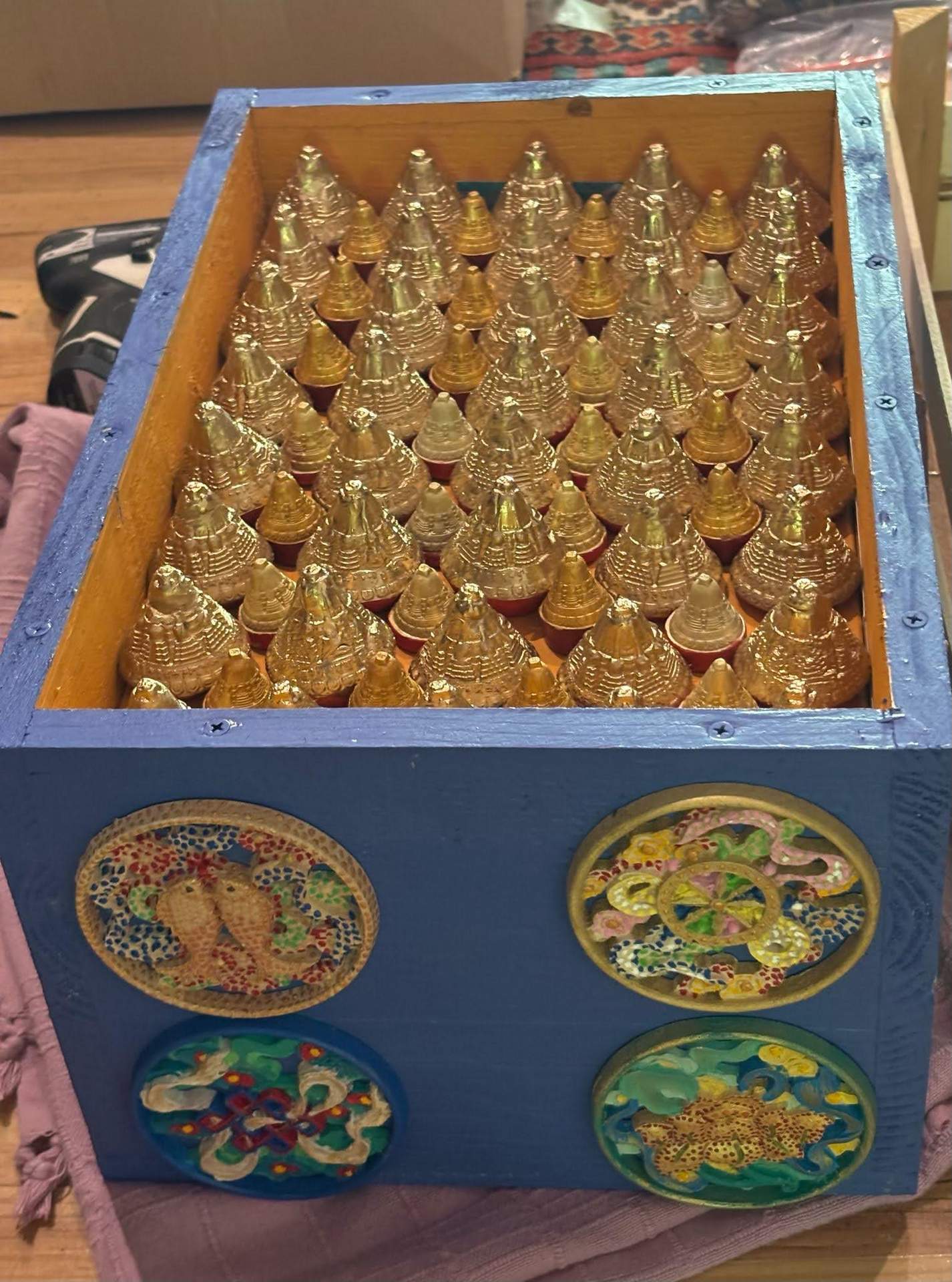
“To make a tsatsa, there are specific steps to follow: clean the mold, oil the mold, prepare the clay ball, give the clay the general shape of the mold, press the clay into the mold, close the mold, tap the mold so the clay properly captures the details, and so on, and so on.
After a while, when the gestures become familiar, you get absorbed in these steps, in this work of the hands. There is also something soothing about the contact with the clay. Once immersed in the rhythm, thoughts arise and fade away without being held onto.
And when the piece is removed from the mold, there is always a sense of surprise: has the tsatsa properly taken the shape of the mold? And if so, then the post-unmolding steps begin. And so it goes, again and again. And although a mold is used, each piece is unique. And when they are gathered together, they all appear alike.”
— St.
About Tsatsa practice
Tsatsa, transliterated from Sanskrit, is a general term used in Tibetan Buddhism to refer to small molded clay statues.
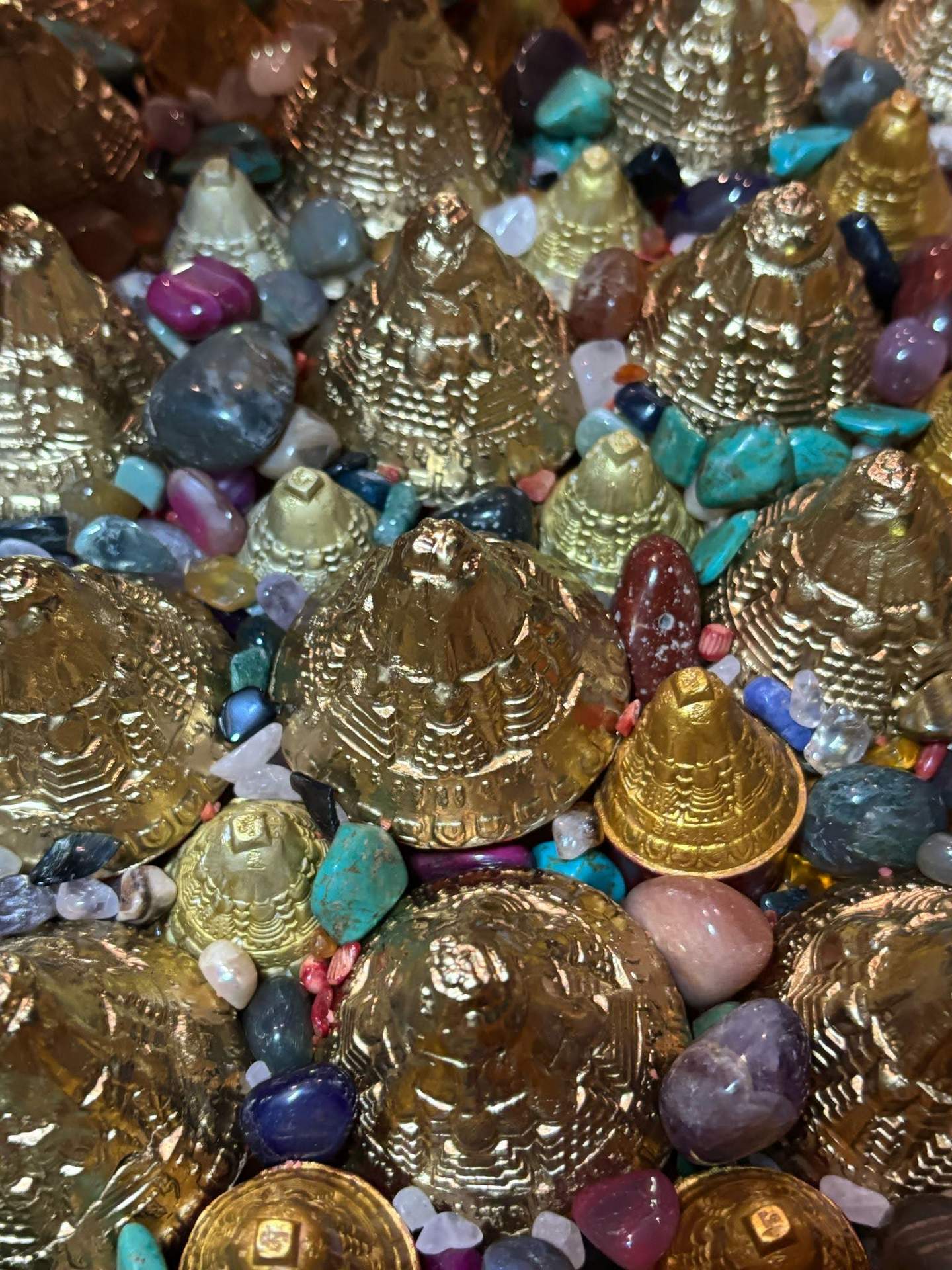
Clay is the primary material used for tsatsa, and those made simply from clay are common. In addition, precious substances may be added, such as gold, silver, pearls, gemstones, coral, agates, and others. However, there exists a much more sacred and religious form of tsatsa: one in which the clay is mixed with the ashes of a trulkou (reincarnated master).
The most revered form is the butsa, made from earth combined with the blood and bodily fluids of a trulkou, along with salt and special Tibetan medicinal substances. Only a few highly realized trulkou—such as the Dalai Lama or the Panchen Lama—are considered eligible to provide the elements for butsa.
Before placement inside a stupa, a strict ritual preparation of the trulkou’s remains must be observed. During this process, salt and Tibetan herbs are used to absorb the blood and bodily fluids of the body. Tsatsa infused with blood, salt, and these medicinal substances are considered invaluable treasures. From the perspective of believers, they are believed to have the power to heal all illnesses and protect against malevolent forces.
The tsatsa is a sacred object to which Tibetans entrust their intentions and devotion. It can be found in many places: on sacred mountains, in temples and monasteries, near rivers, streams, and lakes, along paths, or at crossroads. To properly place tsatsa, a small niche called a caitya is built. Some tsatsa are placed inside large Buddha statues or at the center of a stupa, while others are portable and used as protective talismans.
In essence, tsatsa, mani stone piles, and prayer flags are regarded by Tibetans as objects of devotion supporting a harmonious and fortunate life.
Source: Tibet Collection – Customs and Traditions of Tibet